The Medical Plastics Division exists to facilitate the exchange of technical and regulatory information on polymer materials/components used in medical devices and the healthcare industry.
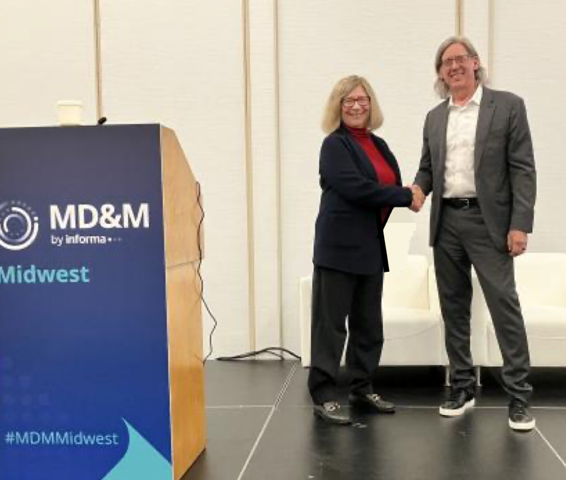
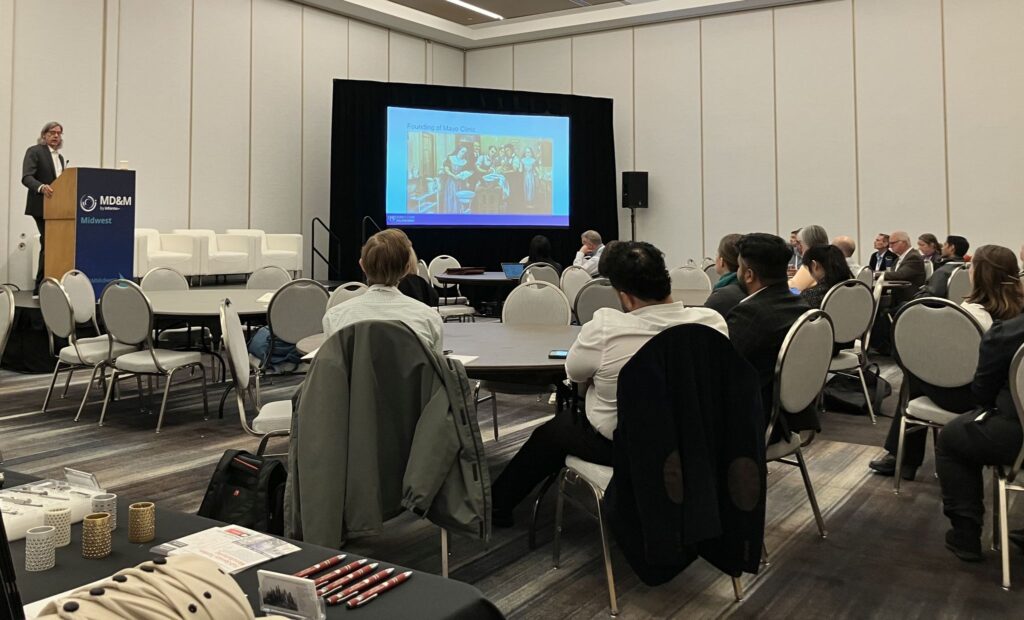
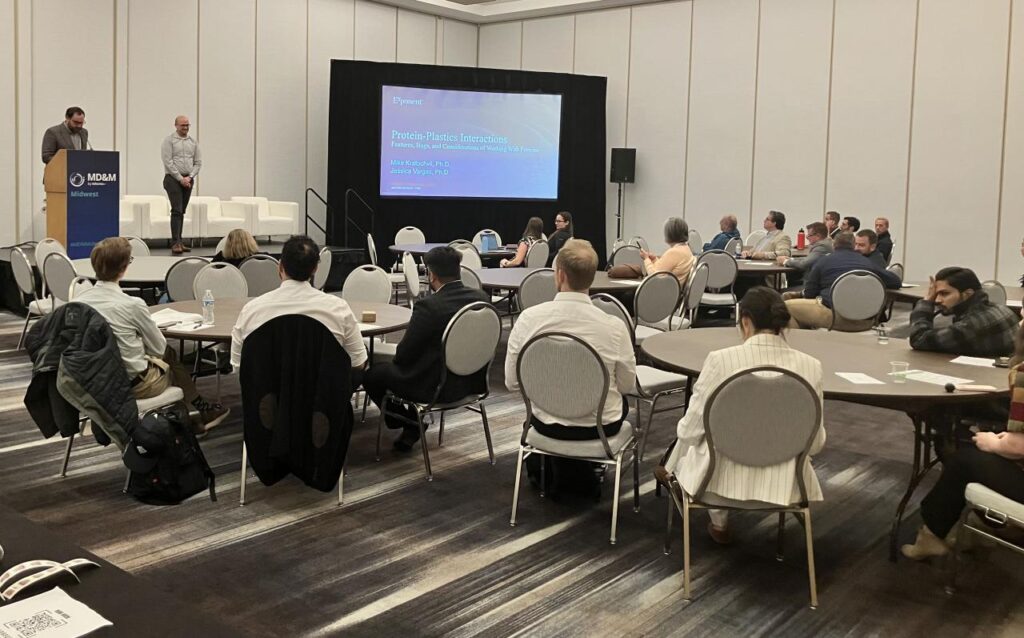
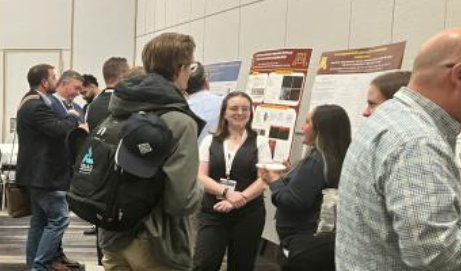
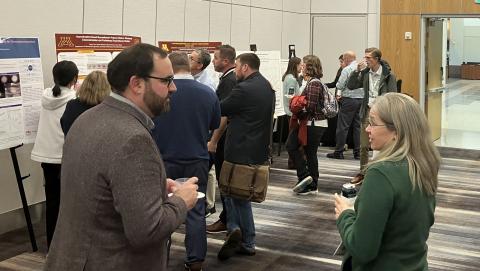
On October 21 2025, MPD hosted our conference on Medical Polymers at MD&M Midwest in Minneapolis. We had a great time meeting old and new friends across the MedTech community. Speakers and attendees joined us from across industry and academia to discuss hot topics in Medical Polymers and Medtech.
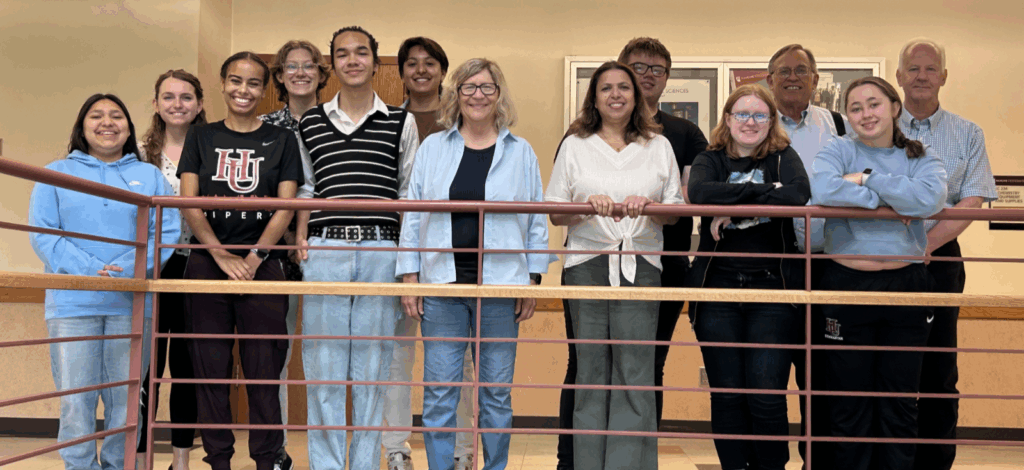
Joanne Moody, a dedicated member of the Society of Plastics Engineers (SPE), recently visited the summer research program led by the Chemistry Department at Hamline University. The visit highlighted the department’s commitment to hands-on learning, interdisciplinary collaboration, and advancing scientific knowledge through student-faculty partnerships.
During her time on campus, Moody had the opportunity to meet with a dynamic team of undergraduate students and faculty members who are actively engaged in a variety of research projects.
Faculty leading these initiatives include:
Dr. Nick Schlotter, the chemistry department chair at Hamline University with expertise in Nanotechnology, Materials Chemistry, and Physical Chemistry.
Francesca Ippoliti, a professor that specializes in small molecule synthesis.
Urvashi Sanhir teaches chemistry at Hamline, researches PFAS degradation and plasma chemistry, mentors undergraduates, and leads outreach through HIPAL and ACS Women Chemists.
Professor, John Matachek, specializes in organometallic and conductive polymers.
Moody’s visit underscored the value of fostering connections between professional organizations like SPE and academic institutions.
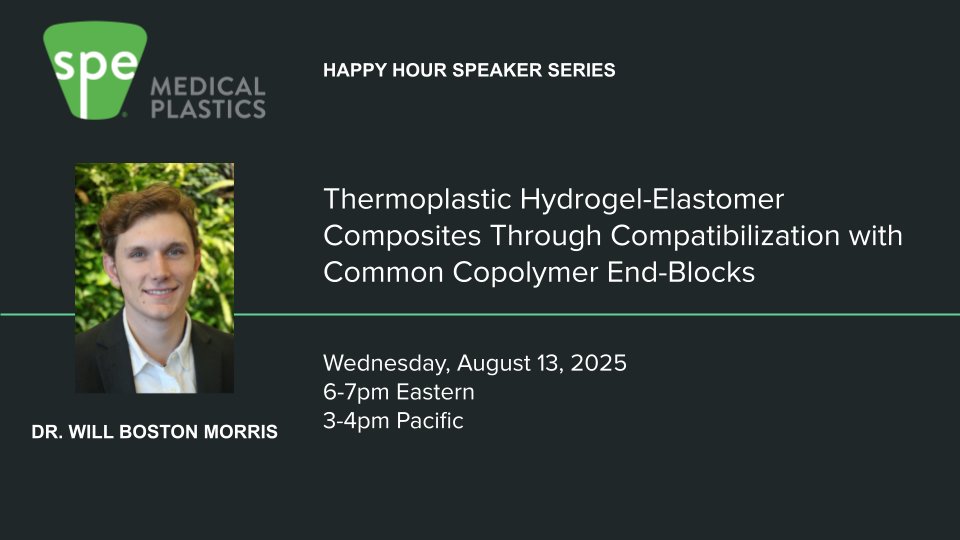
6:00 Welcome / Introductions / Review Session Format
6:05 Introduce our featured speaker, Will Boston Morris
6:30 Begin Q&A & continue “Happy Hour” discussion
7:00 Wrap up and Thanks to all for participating, especially Will aka “Boston”!
Abstract: The development of immiscible polymer-polymer composites that unify disparate material properties into a single bulk material has long been hindered by challenges in stabilizing incompatible polymer domains against macrophase separation while achieving sufficient interfacial adhesion for efficient mechanical load transfer. This work introduces a new class of polymer-polymer composites designed to address these challenges based on forming composites between styrenic block copolymer (SBC) thermoplastic elastomers (TPEs) containing immiscible copolymer midblocks with distinct material properties.
Leveraging the inherent microphase separation behavior of ABA block copolymer systems, which are widely used in TPEs to generate reversible physical crosslinking, this work establishes a simple, scalable, and tunable method for fabricating tough, durable, and intrinsically lubricious hydrogel–elastomer composites. By combining TPE materials that share common vitreous polystyrene end blocks, each component forms its own phase-separated elastomeric network while simultaneously experiencing enhanced interfacial adhesion. Continuous vitreous polystyrene domains formed at the component interfaces stabilize the blend morphology and enable mechanical load transfer between phases. Adjusting the compositional ratios and specific TPEs selected, allows this composite platform to be tailored to meet a diverse range of performance specifications pertinent in medical devices, soft electronics, and membrane technologies.
The thermoplastic hydrogel–elastomer composites developed in this work specifically address the persistent need for intrinsically lubricious, low-friction elastomers and silicones. Traditional elastomers, while flexible and durable, often suffer from tacky surfaces that require secondary lubricious treatments for medical device applications. Conversely, hydrogels offer excellent lubricity and poroelastic relaxation but typically lack scalable methods for introducing the needed mechanical strength and toughness. By integrating an SBC thermoplastic hydrogel phase into commercial SBC TPEs, this work demonstrates the creation of versatile hydrogel composites featuring hydrophilic lubricious surfaces and outstanding mechanical durability while remaining thermally processable using standard processing techniques such as injection molding and extrusion.
Bio: Dr. William Boston Morris recently completed his PhD in Materials Science and Engineering at Colorado State University following a bachelor’s degree in Chemical and Biological Engineering. His doctoral research developed thermoplastic elastomer-hydrogel composites, a promising new medical plastic designed to provide hydrophilic low-friction intrinsically to styrenic TPEs, such as SEBS, for medical devices like catheters and soft tissue mimics. William has experience working with Gelastomerics, a startup commercializing this technology, and managed a materials testing lab at CSU, where he trained and mentored students. He is currently seeking industry opportunities to apply his materials science expertise.